Wilmot James assumes directorship of the Africa Initiative with a forward-focused agenda

Wilmot James, an internationally recognized public health expert and former member of South Africa’s Parliament, is the new director of the Watson School’s Africa Initiative. James has ambitious plans for the initiative, which will highlight African contributions to global affairs and focus on the continent’s future and untapped potential.

The new director of the Africa InitiativeWilmot James, joined Brown in 2023 as a professor of the practice of health services, policy and practice, bringing years of experience in biosecurity, global health governance, and pandemic preparedness. He also currently serves as a senior advisor at Brown’s Pandemic Center in the School of Public Health.

Born in South Africa under apartheid, James has served as a member of parliament and shadow minister of health in South Africa. He currently serves as an advisor to the G7-led Global Partnership’s Signature Initiative to Mitigate Biological Threats in Africa (SIMBA), is a member of the science council to the late Paul Allen’s Fund For Science and Technology, chairs the Wellcome Trust’s Climate-Health Impact Awards Advisory Committee and serves on the boards of BEACON, Resolve to Save Lives, and the Mirror Biology Dialogue Fund. 

The following question-and-answer session has been edited for clarity.

Your background is in sociology; how did you end up in the public health arena?

When Nelson Mandela became president of South Africa in 1994, the country was hit — at its moment of freedom — by the AIDS epidemic; they were unprepared and did not know what to do about it.

Mandela was a Victorian gentleman; he didn't want to talk about sex. But when you are speaking of HIV and AIDS, you have to talk about sex. So he didn’t do well leading in that area; he was reticent and shy. 

I was dean of the humanities at the University of Cape Town at the time, and I went with the vice-chancellor of the university, Mamphela Ramphele, a physician and anthropologist, and we spoke with Mandela about it.

He listened to us and said, “I hear what you are saying, and I will talk to my minister of health.” Her name was Nkosazana Dlamini-Zuma, and unfortunately, she did little. After Mandela stepped down, Thabo Mbeki, who claimed that HIV did not cause AIDS, was elected president. He based his policies on misinformation found on the internet. Among other things, his administration blocked access to antiretroviral drugs and promoted unproven alternatives instead.

Mandela tried to get him to change course.

Harvard did a study on the consequences of the lack of access to antiretroviral drugs in South Africa and estimated that Mbeki’s policies caused over 300,000 preventable deaths. One of them was Nelson Mandela’s son, Makgatho Mandela. So I know firsthand the importance of public health policy and the dangers of misinformation. 
What I would like to see at Brown is a program set apart from any other Africa studies program in the U.S. and elsewhere by looking forward and asking the question, “What are Africa’s greatest assets presently and how can we build on them?

Wilmot James Director, Africa Initiative
 
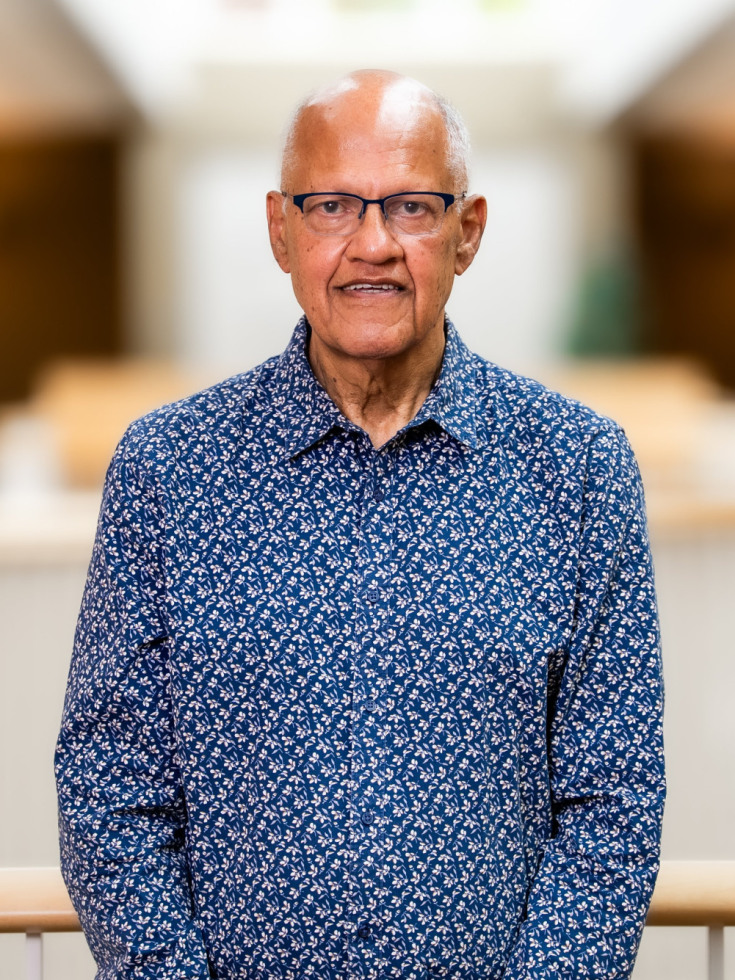
Wilmot James headshot

What are some of your plans for the Africa Initiative?

What happens with Africa institutes, pretty much globally, is that they are based in the social sciences and they tend to focus on the consequences of colonialism. There is, of course, a great deal to research in this historical area, and colonialisms should be interrogated. I would, though, like to see us turn the gaze to what we can build for the future. What I would like to see at Brown is a program set apart from any other Africa studies program in the U.S. and elsewhere by looking forward and asking the question, “What are Africa’s greatest assets presently and how can we build on them?”

And what are those assets? 

The first is demography. Africa has the largest proportion of young people in the world, and it can be a source of great energy, creativity and growth if harnessed properly. So one of my goals is to drive research on what realistic opportunities there are for young African graduates in our age of accelerating modern technological applications. My predecessor at the Africa Initiative, Dan Smith, built a strong program linking Brown to a collaborative network of universities, including Makerere University, University of the Witwatersrand, University of Ibadan and others, called the Consortium for Advanced Research Training in Africa (CARTA), that can be leveraged for student education and training in innovation and entrepreneurship.

Second, Africa has an abundance of critical minerals that are not presently being mined in a way that is environmentally responsible. So, we have a researcher who is working on a survey of what the critical minerals are and where the deposits lie, and assessing whether there are regulatory architectures promoting environmentally responsible mining in place. He is using AI to put that together and will present his findings in a research seminar in October. But what I want to do is see us build a program, together with colleagues at Brown who specialize in the earth sciences, engineering, environmental surveillance and mining regulatory systems, to work on this problem.

Third, Africa’s large tracts of cultivated and unused agricultural land have the potential to become breadbaskets for Africa and perhaps the world. China’s Belt and Road Initiative has recognized the potential; they are investing at scale in this area — just monitor the money and biotech that is flowing into African agriculture at this moment.

We need another green revolution, with more work in biotechnology and agriculture to do things like restore degraded soil. We need a new generation of GMOs, especially drought-resistant crops. So we plan to convene a meeting in April of next year on climate change, water and food security. And that will be the first of a yearly conference series; the next year, we will focus on the mining of critical minerals.

Here at Brown, we have very strong climate, earth, environment, engineering, computation, genetics and food security/nutrition programs. We are going to bring our experts together with African leaders and decision-makers and share our research, which they may be able to use to base critical decisions about resource allocation.

What kinds of programming do you envision for the initiative?

We are going to have a lecture series that showcases the contributions of African leaders to global affairs. It’s important in this age, when those contributions have been diminished. 

I will be giving the first lecture on Nelson Mandela. The second will be by John N. Nkengasong, the founding director of the Africa Centres for Disease Control and Prevention (Africa CDC). He served in the Biden administration as the U.S. global AIDS coordinator but stepped down when President Trump came in. He will be here in November.

So every term we will have a senior African leader come and talk to us. I want the initiative to really focus on Africa’s contributions to global leadership.