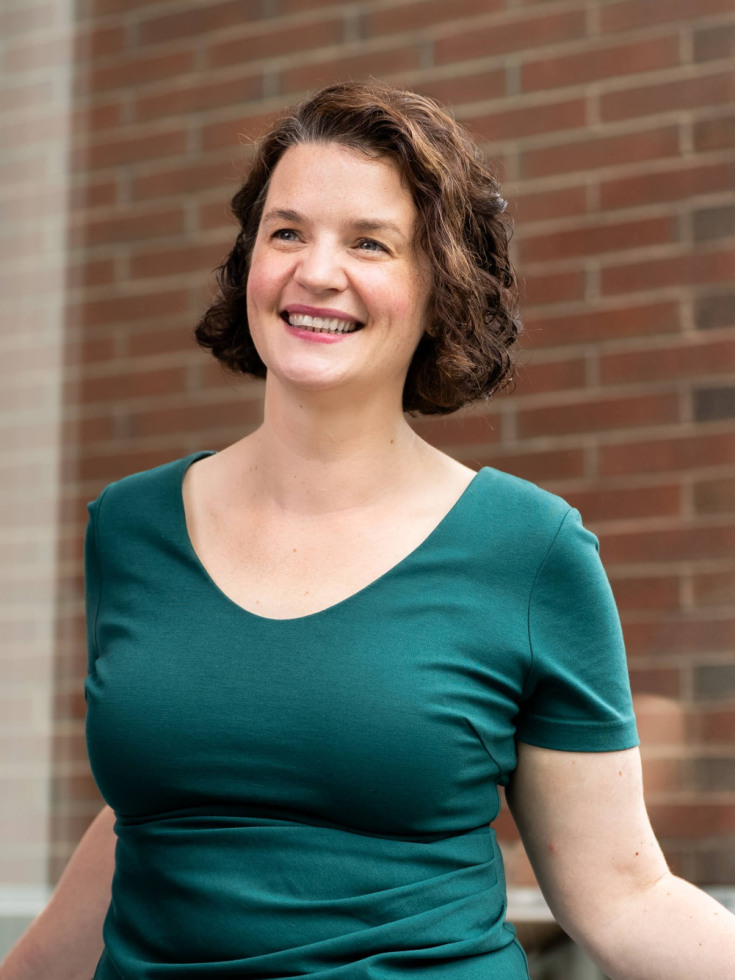
The new Faculty Director of the Master of Public Affairs Program, Bryce Millett Steinberg, came to Brown as a postdoctoral fellow in 2015 and joined the faculty in 2017. She earned her bachelor’s degree in economics from Brown in 2009, and her Ph.D. in economics from Harvard in 2015.
Steinberg is a development economist who studies what shapes families’ and individuals’ investment in education and health in low-income countries. She has taught Economics for Public Policy (MPA 2460) during the first summer sequence of the MPA program since 2020. As she steps into her new role as faculty director, Steinberg answered questions about the program, why it’s structured the way it is and some of its new features.
The following question-and-answer session has been edited for clarity.
What attracted you to the opportunity to lead the MPA program?
I’ve taught in the MPA program for a long time, and I’ve always been on the front lines because I teach a very intensive part of the program when students first get to campus, so I’m one of the first faces they see when they arrive. I knew there were some things I wanted to do in the program that I couldn’t do as a professor. I’m really excited to think about the program as a whole now, and how its parts relate to each other, rather than just one piece.
How do students progress through the program over the course of the year?
Students start with a very intense, analytically focused summer session — some call it a “boot camp” — they learn two semesters each of econ and stats in 10 weeks. In the fall, in their coursework, they build on those tools and begin to dive deeper into a specific policy area, whether it’s climate, development, international finance, or something else. In the spring, they bring all of that together in their applications courses and, ultimately, create a real-world deliverable in the Policy In Action Project. So over the course of the program, students move from theory to analysis to practice.
Why is mastering those analytical tools so important to get to that step where they are actually doing work on the ground?
You need that background to make good policy. I approach things from an economics perspective, and you need to master the conceptual side of economics to understand the various forces at play. For example, consider raising the minimum wage — it could raise income levels for the poor, which is good. But there are other forces at work that could produce bad outcomes, and you need to understand them. Raising the minimum wage could also raise prices or increase unemployment. At the end of the day, to create good policy, you have to be able to weigh those pros and cons to make informed decisions.
The Policy In Action Project is where students put theory into practice. Why is it so important for students to do that — to learn through doing — while they're still in the program?
Some things are hard to teach in a classroom. For example, in classes, when we give you a data set for a problem, it’s perfect. Everything is labeled perfectly; there are no missing variables. Everything is constructed in a way that, if you do the problem right, you’ll get the right answer. But in the real world, things are considerably more complicated. You might download data from the Bureau of Labor Statistics and find that there are things missing or that it’s not constructed the way you thought it would be. You might find the whole year of data missing. You don’t know until you get in there. It’s hard to teach students how to handle problems like that without giving them a real opportunity to do it. The PIA gives students a chance to do these things, but in a controlled environment with more supervision and mentorship than they’ll find in the workplace.
I think they learn a lot by diving into a project the way they would in the workforce, and they learn a lot from each other as they do it. Some students come in with a lot of workplace experience, while others bring strong analytical skills but less real-world experience. That’s what makes diverse working groups so effective — they let students learn from each other and their varied experiences. In this program, you learn from your peers as much as you learn from your professors.