Research and scholarship programs provide MPA students with unique learning and leadership opportunities

The Master of Public Affairs (MPA) Program offers two distinctive programs that enable students to build connections and deepen their MPA experience. The MPA Research Fellows Program emphasizes faculty engagement and hands-on research, while the Equity in Policy Scholars Program stresses interaction with policy practitioners and leadership development.

The Master of Public Affairs (MPA) Program at the Watson School of International and Public Affairs offers two unique experiential learning opportunities for its MPA students that emphasize hands-on learning. The Research Fellows Program allows select students to work directly with faculty on research projects, and the Equity in Policy Scholars Program creates opportunities for leadership development through meaningful interactions with high-profile policy practitioners. 

Research Fellows Program

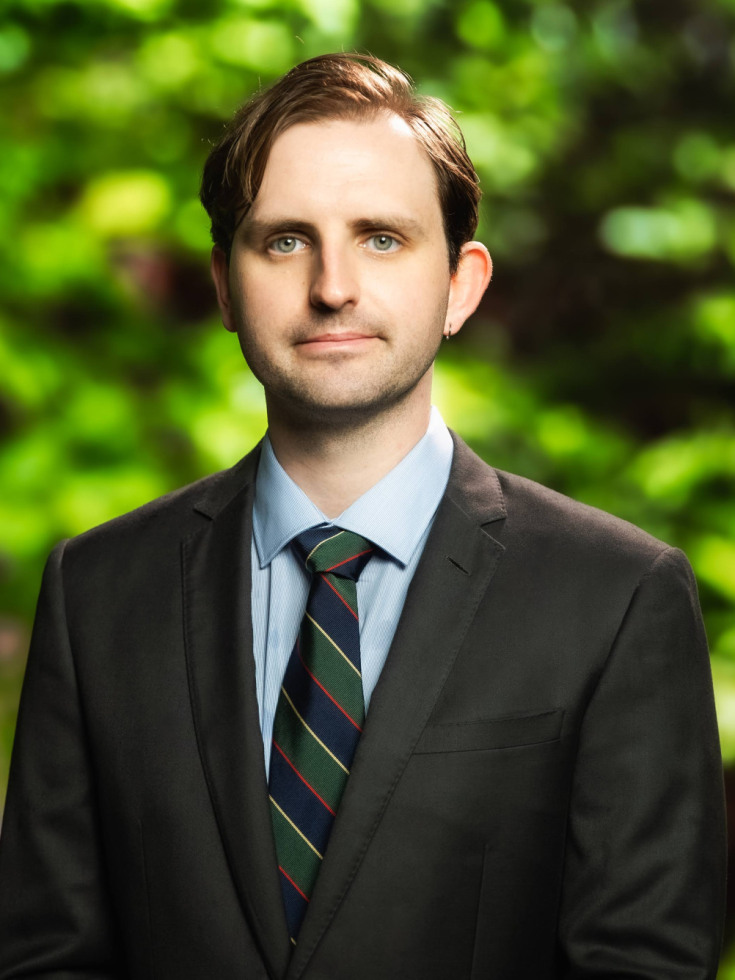
Grant Simmons, a 2019 graduate of Whitman College in Walla Walla, Washington, came to the Watson School’s MPA Program after working for the consulting firm Kearns & West for several years, looking to gain policy experience so he could take his career to the next level.

“I had been helping other people craft policy,” said Simmons, “but I wasn’t one of the people who was going to craft policy myself because I didn’t have any hard policy experience.”

This fall, Simmons, a California native, was named one of 11 MPA Research Fellows, a competitive fellowship program in which select students collaborate on cutting-edge research projects with faculty across the Watson School’s centers and initiatives. Fellows work on their projects from October to January, learning while they conduct real-world research.

Simmons is working on a research project with Watson Fellow, Marc J. Dunkelman. It is providing him with the kind of concrete, hands-on policy experience he came to Watson seeking. “I’m helping him do research on infrastructure and transportation projects. He’s examining why some projects get chosen and put through the pipeline while others languish,” he said. “Marc is very interested in the trade-off and tension between democracy and efficiency.”

Simmons has seen this tension up close and personal in his own career. “I worked on a large multi-year transportation project at my previous firm,” he said, “the Oregon Department of Transportation’s tolling project.” He noted that the state spent millions of dollars on the project only for it to be cancelled by Oregon Governor Tina Kotek in March 2024, because it was so unpopular with voters, after almost a decade of deliberations. 

“When I saw there was a fellowship pertaining specifically to transportation infrastructure projects, and what makes a project efficient, I was very excited because it tracks so closely with my background,” said Simmons. 

In his research for Dunkelman, Simmons said he is constructing a timeline on another long-running project, the Massachusetts South Coast Rail project, which brings commuter rail service to Taunton, New Bedford and Fall River. “The rail line just opened this year,” he said, “but it had been in development since 1991.” 
When I saw there was a fellowship pertaining specifically to transportation infrastructure projects, and what makes a project efficient, I was very excited because it tracks so closely with my background.

Grant Simmons MPA Class of 2026
 
Grant Simmons

“I’m doing a historical timeline of the entire project,” he said. Because of its long gestation period and complicated history, information on the project is scattered, and Dunkelman needs it organized and in one place for his research project.

Some aspects of the project had not been documented at all, so Simmons went into the field to conduct interviews. “I interviewed the previous director of the project, Kristina Egan,” he said. “There are so many gaps in the public record, so I would ask her to help me fill in missing information…I also asked her about what she thought went right and wrong with the project.”

Another MPA Research Fellow, Keyton Lytle, came to the Watson School’s MPA Program directly from Texas Tech University, where he earned his bachelor’s degree in political science and history in May 2025.

Lytle has long been fascinated by military history, and one of the things that drew him to Watson in the first place was the Costs of War project’s work on government contractors. “Conveniently,” said Lytle, “the project I ended up working on is with them.”

Currently, Lytle is collecting data for the project, but he said they plan to move on to analyzing it soon. “It’s been just as exciting and interesting as I thought it would be thus far,” he said. 

“I’m collecting data on the financial failures and missteps of the post-9/11 wars as it relates to the United States’ inability to manage its contracts effectively, and the failure to properly vet contractors,” said Lytle. As an undergraduate, Lytle worked on a project analyzing the capabilities and scope of private military security companies. “Now I’m moving into Costs of War’s focus, which is waste, fraud and abuse,” he said. “That is something that I had not gotten into before, so it’s a really great opportunity for me to expand my horizons.”

Lytle noted that much of his research is focused on drawing data from primary sources. “I’m pulling data from Inspector General’s reports, budget documentation and audits that have been published publicly,” he said. He occasionally draws data from secondary sources because, he noted, “some of this information has been subsumed into the federal collection and removed from the public eye.”

Now I’m moving into Costs of War’s focus, which is waste, fraud and abuse. That is something that I had not gotten into before, so it’s a really great opportunity for me to expand my horizons.

Keyton Lytle MPA Class of 2026
 
Keyton Lytle

“The most interesting find in that data set so far,” said Lytle, “came from U.S. Investigations Services,” an independent contractor who performed background checks for the U.S. government. “The federal government figured out — years later, I might add — that many of the background checks that they completed were fake,” he said, “They took well over a billion dollars in funds, and after a lawsuit, they only paid 30 million of that back.”

“This is the same firm that vetted Edward Snowden,” he added.

Once the data collection phase is completed, the Costs of War research team plans to get to work analyzing the data. “We’re going to see what we can draw out pattern-wise,” said Lytle, “and we’re going to be able to tell some interesting stories and demonstrate why the contracting sphere has produced so much waste and fraud, and what reforms might help remediate those harms in the future.”

Once he has completed his degree, Lytle said he intends to pursue a career in public service. “I’m particularly interested in working for either the Department of State or the Department of Defense,” he said. 

For his part, Simmons said he plans to return to the West Coast after earning his MPA. “I’d like to become a legislative aid for a progressive lawmaker at the state level in California,” he said, “I’m particularly interested in the issue of water and how we use water in the West.”

Equity in Policy Scholars

The Watson Equity in Policy Scholars program is a scholarship and leadership development opportunity in the Watson School’s MPA program. Established in 2024, the program’s mission is to equip aspiring policy leaders with further leadership tools, community, and experiences needed to address the challenges of disparity and inequity in policy and public affairs. 

The program is open to MPA applicants with demonstrated leadership experience and a commitment to addressing inequity issues in public policy or global or public affairs. From access to health services and shortages in rural communities to tackling food insecurity and food deserts, Watson Equity in Policy Scholars work to address systemic inequities at the local, state, national and international levels.

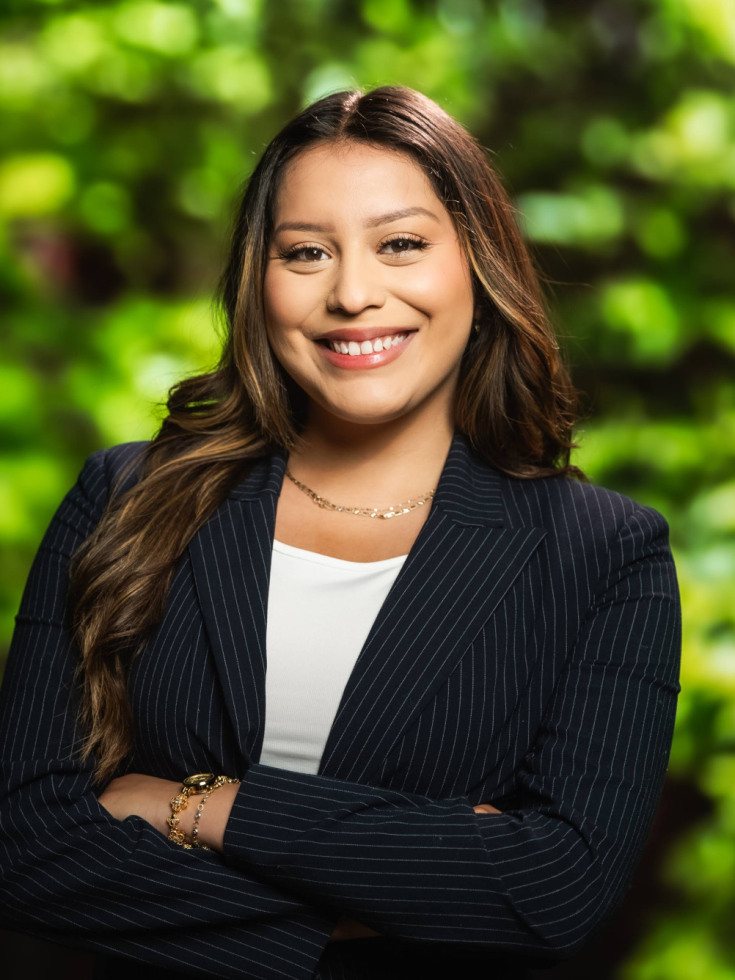
Aurora, Colorado, native and first-generation college student, Ashley Garcia Torres, entered the Watson School’s MPA program as an Equity in Policy Scholar after graduating from Regis University in Denver, Colorado, with a bachelor’s in political science. She had a long history of community leadership before she ever set foot at Brown, having already worked on public policy issues for over seven years. 

“I really care about community engagement and I love to work,” she said, “I was a community organizer and lobbyist back home.” Among other things, Garcia Torres interned for the Jared Polis campaign in the Colorado Governor’s race, supported Aurora Public Schools through school board advocacy, and lobbied the state legislature on education and prison reform measures, helping to pass five bills.

“As an undergrad,” she said, “I was able to manage my schedule so that I was working at least 40 hours a week while taking classes.” A partial list of Garcia Torres’ leadership and volunteer positions includes board membership with the Academy of Urban Learning and STRIDE Community Health Center, policy fellow coordinator for Young Aspiring Americans for Political Activism, legislative intern for the Colorado House of Representatives, and a fellow at the National Center for Youth Law.

“I have had the pleasure and honor to successfully work on and develop policies over the course of several years,” she said. “What inspired me to get my MPA was to learn how to do this better, and ideally expand my work onto a national stage.”

Garcia Torres said that when she began exploring MPA programs. “I attended virtual information sessions at about 15 different schools.” Watson’s information session piqued her interest. “It was unique,” she said, “there was a lot of engagement with the audience that I didn’t see elsewhere. Many of the other schools focused more on their prestige, and while Brown is obviously a very prestigious institution, that wasn’t their focus.”

But it was a one-on-one session with the MPA program’s Associate Director of Admissions and Recruitment, Catherine Rodarte, that convinced Garcia Torres she belonged at Brown. “Catherine encouraged me to apply,” she said, “But what really struck me was her genuine interest in me as a person.”

The reason I chose Watson was not just because of the scholarship they offered me, but the amount of genuine care and dedication I saw from the staff. It was honestly unlike anything else I’d ever seen in the application processes at either the graduate or undergraduate level.

Ashley Garcia Torres MPA Class of 2026
 
Ashley Garcia Torres

“The reason I chose Watson was not just because of the scholarship they offered me, but the amount of genuine care and dedication I saw from the staff,” said Garcia Torres. “It was honestly unlike anything else I’d ever seen in the application processes at either the graduate or undergraduate level.”

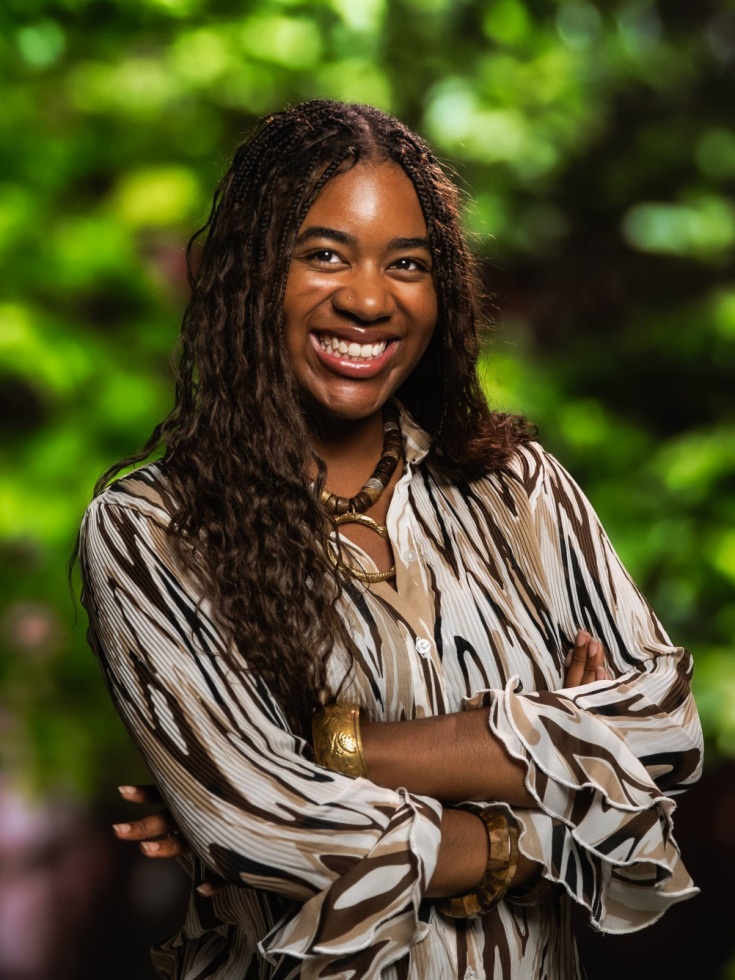
Lailah Williams came to Watson as an Equity in Policy Scholar after earning her undergraduate degree in political science and international studies with minors in research and political communications from Louisiana State University. “What really stuck out to me about Watson was the Equity in Policy Scholars Program,” she said. “I knew I wanted equity to be a core tenet of my educational experience, because it’s integral to the work I want to do when I complete my MPA degree.”

Williams said that part of what inspired her to apply to the MPA program was her experience as an undergraduate in several leadership positions focused on public service.

“One of my most memorable experiences in college,” said Williams, “was working as the program director of Model United Nations for the capital area YMCA in Baton Rouge.” In her capacity as director, Williams mentored high-achieving high school students to facilitate the annual Model United Nations Conference. Determined to make the conference more equitable, Williams collaborated with EdTrust in Louisiana — an organization that promotes educational equity for historically underserved students in the state’s schools — to enroll a group of underrepresented students who did not have a Model U.N. club at their school. The students were able to participate in the program at no cost to themselves. 

“That opportunity was incredibly eye-opening,” said Williams, “because these students were already so capable of leadership, but had not yet been connected with our conferences. I believe everyone should have a chance to be a part of a community where they belong, so expanding the program’s network was the first step to accomplish that.”

Knowing she wanted to expand her leadership skills to further promote equity, Williams was thrilled when the Faculty Director of the MPA Program, David Blanding, personally called to tell her she had been accepted. “He was one of the few program directors who called me to let me know I’d been admitted,” she said. “Hearing from him directly made the program feel very personal. I decided to accept right at that moment.”

Another thing Williams found attractive about the program was the opportunity to learn from high-profile, active practitioners. “This semester I’m taking a class with Isaac Dovere,” she said. Dovere, a Watson senior fellow in international and public affairs, is a senior reporter for CNN who covers Democratic politics and the intersection of politics and the media and teaches Strategic Communications at Watson. 

“Isaac will come into class from D.C.,” said Williams, “and he’ll say ‘Oh, I was just interviewing Kamala the other day,’ or ‘I heard from Zohran Mamdani’s team.’ It’s amazing to learn from someone who talks to all these important politicians and knows politics so intimately.”

This semester I’m taking a class with Isaac Dovere…Isaac will come into class from D.C., and he’ll say ‘Oh, I was just interviewing Kamala the other day,’ or ‘I heard from Zohran Mamdani’s team.’ It’s amazing to learn from someone who talks to all these important politicians and knows politics so intimately.

Lailah Williams MPA Class of 2026
 
Lailah Williams

Garcia Torres said she is also enjoying the opportunity to learn from a distinguished Watson practitioner, Watson Senior Fellow and renowned human-rights lawyer, Malika Saada Saar, who is co-teaching Human Rights and AI: Impacts, Risks, and Opportunities with Blanding.

The course “explores the complex, rapidly evolving landscape of AI and its profound impacts on human rights at the intersection of technology, public policy, and international law.” Saada Saar and Blanding encourage students to think critically about artificial intelligence, considering both its potential to impinge on human rights and its capacity to serve as a vehicle for liberation. 

“It’s been amazing learning from them [Saada Saar and Blanding] and critiquing AI,” said Garcia Torres, “It’s my favorite class so far.”

Garcia Torres, who recently became an MPA Student Ambassador to share the program's benefits with others, said she believes the Equity in Policy Scholars Program is preparing her to be a leader in the public policy arena. “The program is equipping me with rigorous analytical tools, strategic frameworks and the ability to think more critically of and within public-sector systems,” she said. “Simply put, it’s preparing me to reenter policy and navigate complex policy challenges with a wider skill set and toolset.”

“I’m gaining a wider network of motivated policymakers and influencers.  And through one-on-one mentoring, I have additional preparation on navigating the workforce, designing equitable policies, and leading with integrity and impact in the public policy sector,” said Garcia Torres.

After graduating, Garcia Torres said, “I want to continue a lot of the work that I started back home in Colorado.” She said she would like to attend law school within the next few years so that she can work at the intersection of policy and law. “I want to continue to advance equitable policies in Colorado,” she said, “but a lot of the issues I’m interested in aren’t just Colorado issues, so eventually, I’d like to branch out to other states or work on a national level.”

Williams said she also believes the Equity in Policy Scholars Program is preparing her for leadership in the public service field. “The program has equipped me with the skills to understand how to center public service and equitable solutions to each problem that I will encounter after graduation. It has also challenged me to expand my leadership skills and my understanding of policy analysis,” she said. “As a student interested in urban planning and social policies, it is more important than ever to center equity, and Watson has provided a vehicle that allows me to improve myself as a budding policy leader.”