Şebnem Kalemli-Özcan to serve as next director of the Rhodes Center for International Economics and Finance

Effective July 1, 2026, Şebnem Kalemli-Özcan will become director of the Watson School’s Rhodes Center for International Economics and Finance, taking over for long-time director Mark Blyth.

In an email to Watson School faculty and staff on Tuesday morning, Dean John N. Friedman announced that Şebnem Kalemli-Özcan, Schreiber Family Professor of Economics, will be the next director of The William R. Rhodes Center for International Economics and Finance, effective July 1, 2026.

A native of Turkey, Kalemli-Özcan is a leading global scholar in international economics and finance who researches the impact of global trade and financial linkages on economic fluctuations and growth. She received a bachelor’s degree in economics from Middle East Technical University in 1995 and a Ph.D. in economics from Brown University in 2000. She returned to Brown in 2023 as a member of the Economics Department and founder of the Global Linkages Lab.

Kalemli-Özcan said that she was “deeply honored and very excited” to be named the center’s next director. “At a time when global markets, policy frameworks, and geopolitical forces are rapidly reshaping one another,” she said, “the center’s mission has never been more important. Building on the center’s existing strengths, I look forward to expanding the community that brings rigorous research to the forefront of policy debates, training the next generation of international economists, and deepening our understanding of the world’s most pressing global challenges.”

In his email, Friedman thanked current Rhodes Center director Mark Blyth for his “outstanding leadership” over the past eight years. Friedman noted that Blyth, the center’s inaugural director after it moved to Watson, has “cultivated a thriving interdisciplinary community.” 

“Through his deep expertise in political economy,” said Friedman, “Mark has hosted signature biannual conferences and other events, recruited outstanding postdoctoral fellows, and lent his distinctive Scottish brogue to Watson’s podcasts. He also helped to launch the Global Challenges Seminar Series at Watson this year as part of the School’s new interdisciplinary research efforts.”
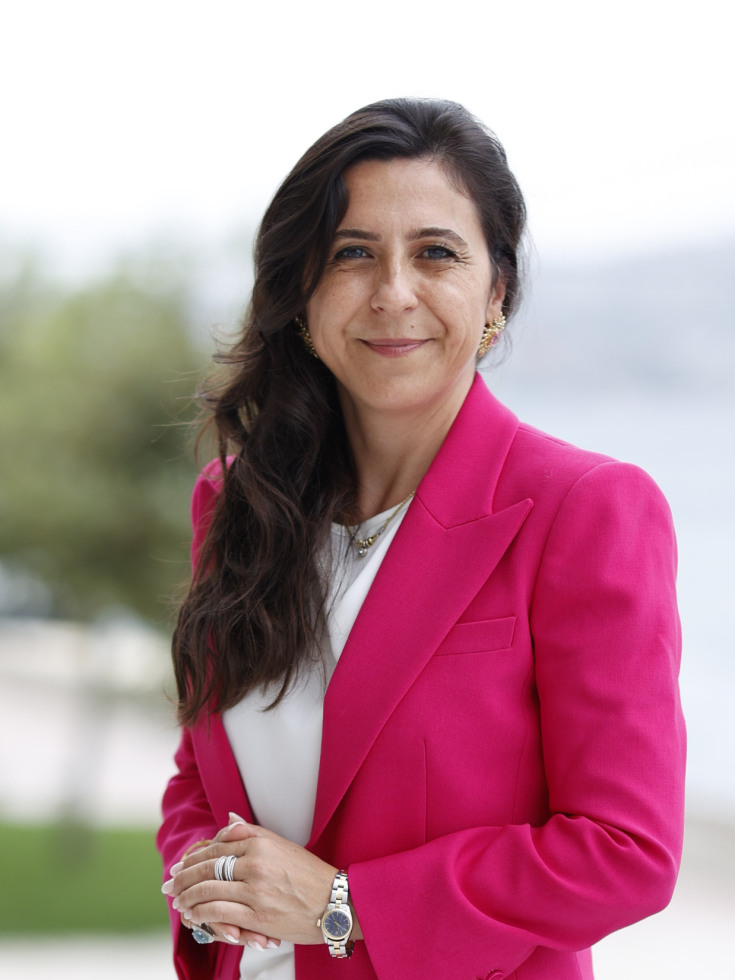
At a time when global markets, policy frameworks, and geopolitical forces are rapidly reshaping one another, the center’s mission has never been more important. Building on the center’s existing strengths, I look forward to expanding the community that brings rigorous research to the forefront of policy debates, training the next generation of international economists, and deepening our understanding of the world’s most pressing global challenges.

Şebnem Kalemli-Özcan Schreiber Family Professor of Economics
 
Şebnem Kalemli-Özcan

In addition to her appointments at Brown, Kalemli-Özcan is a research associate at the National Bureau of Economic Research (NBER) and a research fellow at the Center for Economic Policy Research (CEPR). She is the co-editor of the American Economic Journal: Macroeconomics, and serves on the economic advisory panels of the New York Federal Reserve and the Bank of International Settlements. 

Kalemli-Özcan will bring significant expertise in the areas of international finance and development to the center, having published in journals such as the American Economic Review, the Quarterly Journal of Economics, the Journal of Finance, the Review of Economic Studies, the Journal of International Economics and the Journal of Development Economics. She is also the first Turkish social scientist to receive the Marie Curie IRG prize in 2008 for her research on European financial integration.

Friedman praised Kalemli-Özcan’s “highly impactful” work that “focuses on ways that global interconnectedness drives and is also shaped by policy,” citing her recent papers on trade and tariffs, supply chains, sovereign lending and debt crises, and financial fragmentation.

Kalemli-Özcan said that one of the center’s top priorities during her tenure will be “understanding the current global ecosystem — how trade involves more than two countries, one supplier and one financier, and how the global allocation of finance, technology, and talent interacts with geopolitics and economic security.” 

“With this focus,” she said, “we can better grasp how the complex web of the international economic system is evolving and teach our students how to navigate the global marketplace and shape future economic policies, doing our part in the broad vision of the Watson School.”