Student Spotlight: Sara Homma ’27

Sara Homma, a San Antonio native with roots in Mexico, came to Brown University through the Brown|RISD Dual Degree Program. Over the five-year program, Homma found that her International and Public Affairs (IAPA) studies began to influence her artwork, and her artistic practice informed her academic work.

When thinking about where to apply to college, San Antonio native Sara Homma found herself conflicted. Homma was a strong academic student with an interest in public policy, but also a talented artist with a lifelong passion for art. “I didn’t know if I could navigate my two equally strong interests,” said Homma.

She found the ideal solution in the Brown|RISD Dual Degree Program (BRDD), a five-year undergraduate program that lets students earn bachelor’s degrees from both Brown and the Rhode Island School of Design (RISD). The program is one of the most selective undergraduate degree programs in the country. Applicants must first be accepted into both schools independently, and only the top candidates among those are admitted to the dual degree program. 

“My mom and I visited Brown and RISD when I was a freshman in high school,” she said; “I learned about the program, and set my sights on it then and there.” Knowing how competitive the program was drove Homma throughout high school. “I just worked really hard on my academics in school, but through it all, painting remained important to me. I poured all my effort into both things,” she said.

Homma was surprised and thrilled to learn she was admitted to the program. “It was just unbelievable to me that I actually got in,” she said. “I knew having the opportunity to study at Brown alongside other students who care deeply about academics, and to study at RISD and to be able to make art alongside students who are just as passionate about art as I am was an unbelievable opportunity,” she said. 

But when she arrived as a first-year student, Homma found the transition difficult. BRDD students are required to follow RISD’s rigorous first-year curriculum just like all other RISD students. “I was suddenly thrust into the art school environment where I was only taking art classes and having to produce a lot of work. I was taking three eight-hour studio courses per week. All my homework was art! It was a really difficult adjustment for me.”

She also felt culturally out of place. “I grew up in Texas, in a pretty conservative area; I went to a private religious high school with a military history. So I grew up in an environment in which artistic expression wasn’t highly valued.” 

“I really struggled to identify with a lot of my RISD classmates at first,” she said. Homma felt more at home among her Brown classmates. “I felt like I fit in better at Brown. There were more people at Brown with experiences similar to mine.”

But over the course of the program, Homma felt something change. “At first, I was very torn about my identity as an academic and as an artist. I felt that they were very separate things.” Over time, Homma began to see her art and her studies as a concentrator in International and Public Affairs (IAPA) as synergistic. “Today, international and public affairs is just as much a part of my artistic practice as my artistic training; now that I see the two things as symbiotic, they both inform and strengthen each other.”

Homma stated that her experience in IAPA has made her a better artist. “I was really trying to find my voice as a painter,” she said, “I had become very technically skilled, but I was struggling to bring substance to my work. I made good pictures, but I didn’t feel they were saying much.” 

My studies in IAPA became my way of finding things to say through my artwork. It wasn’t until I got really deep into painting and deep into my studies in IAPA that I was able to…bring art and academics together.

Sara Homma IAPA Class of 2027
 
Sara Homa standing next to exhibition sign

“My studies in IAPA became my way of finding things to say through my artwork,” she said. “It wasn’t until I got really deep into painting and deep into my studies in IAPA that I was able to reconcile the two things — to bring art and academics together.”

Homma credits a class she took with Nicole Pangborn, Urban Ethnography and Public Policy, with sparking the realization that creating art and academics don’t have to be entirely separate enterprises. “It was such an aha moment for me,” she said. “I realized the research I was doing in IAPA was like the research I was doing in painting. Ethnography is a lot like making art, and painting can be a mode of ethnography.”

“Before, my work was focused on my own experiences as the child of Mexican immigrants from South Texas. My lens was really narrow. My studies in IAPA opened up my work,” she said. “Reading interesting research papers, ethnographic fieldwork and learning what’s happening in the sphere of global governance led me to see myself as part of a global network. And now my work examines the world through a wider lens. The possibilities are endless when you are thinking about the entire world.”

The revelation profoundly realigned her perspective. “Now I realize that being an artist encompasses and informs everything that I do. Art and academics no longer feel like separate pursuits to me.”

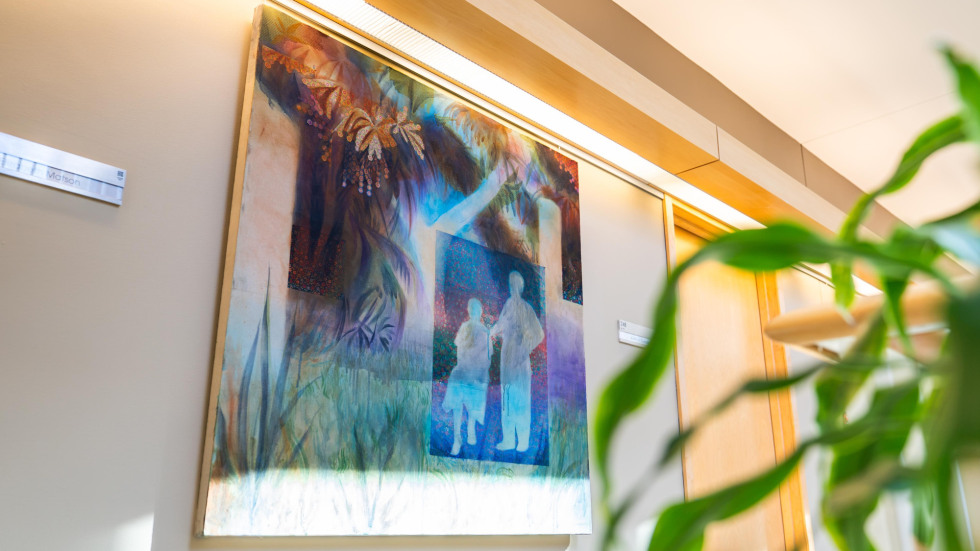
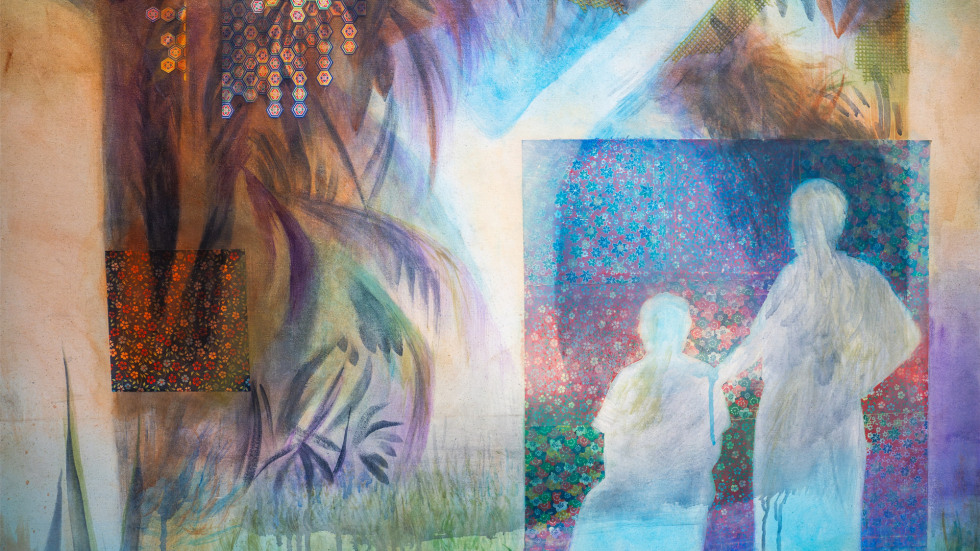
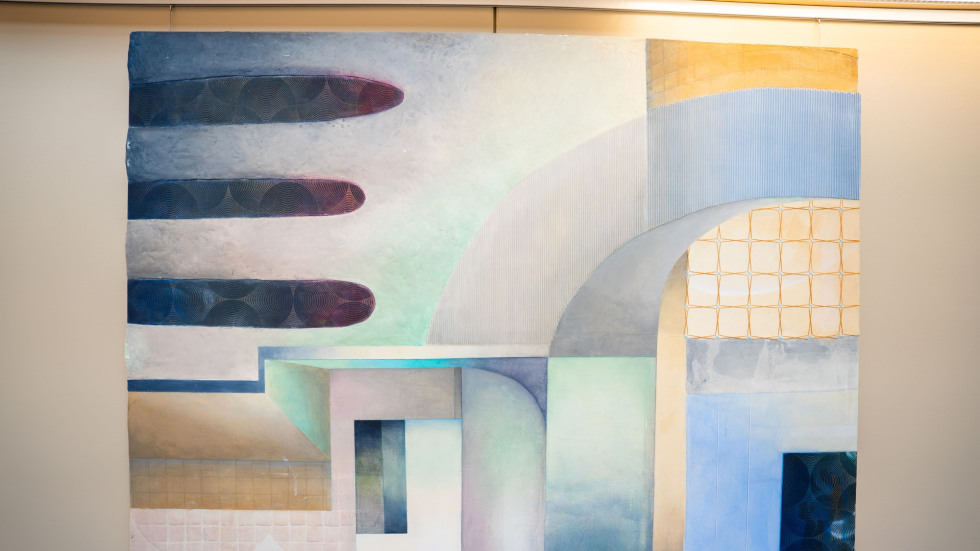
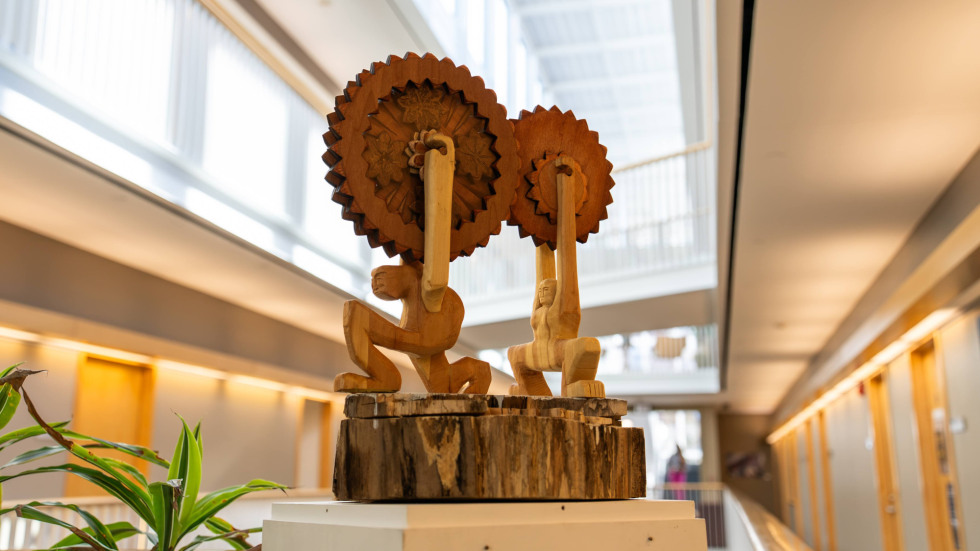
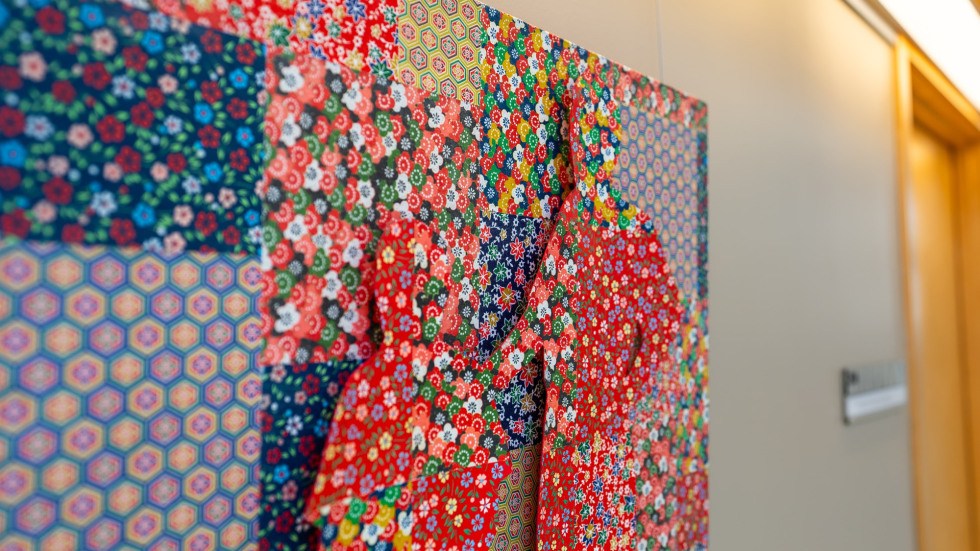
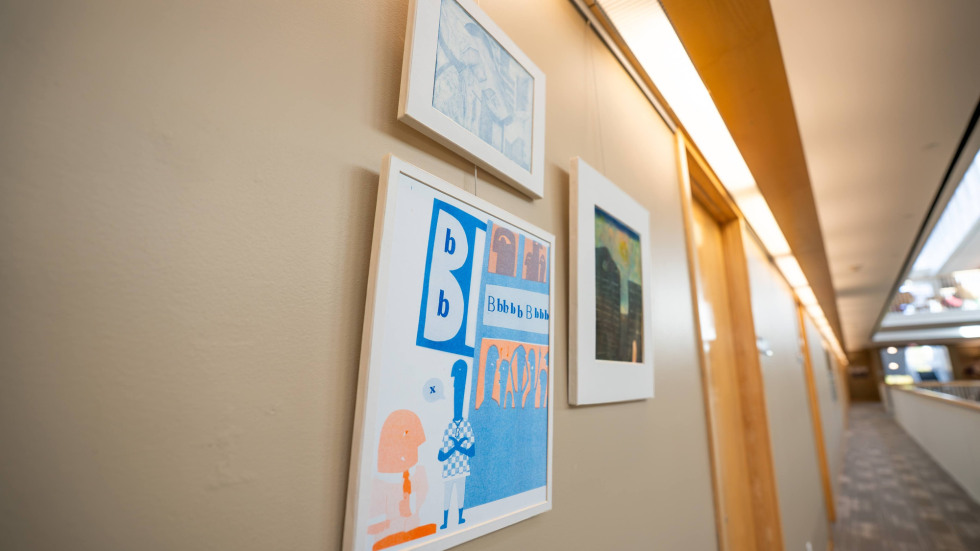
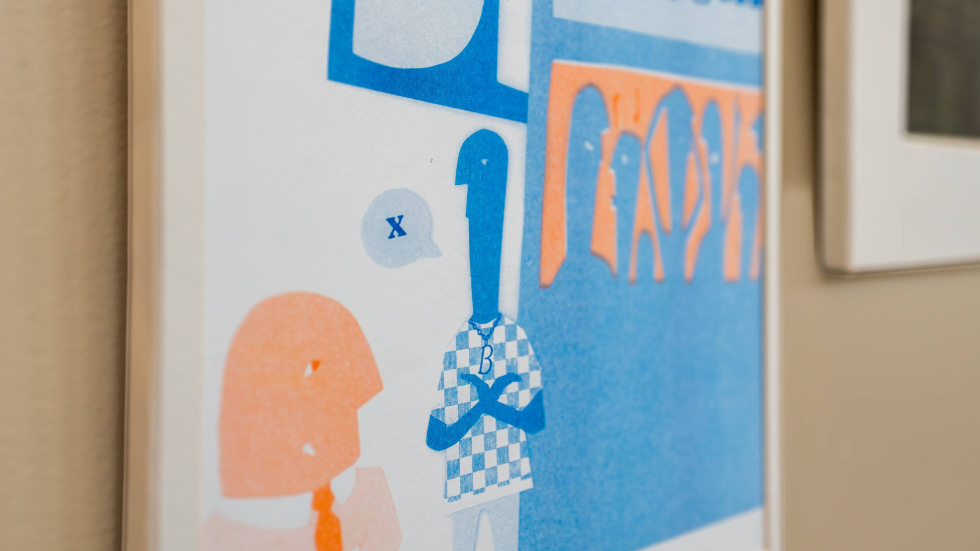
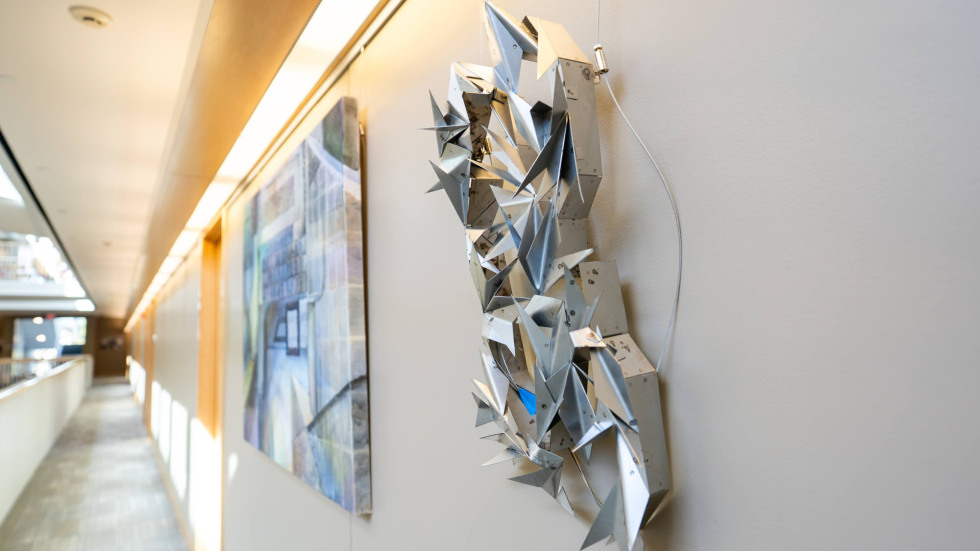
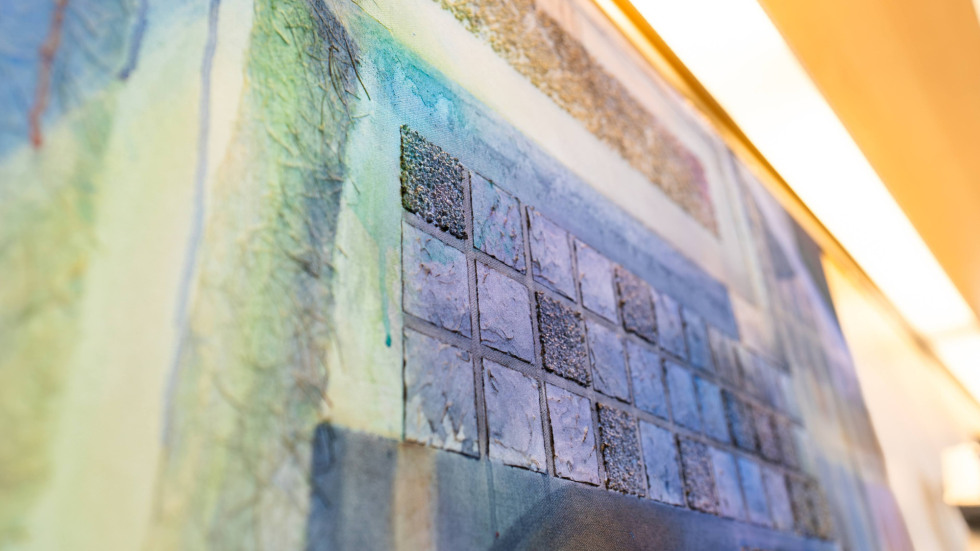
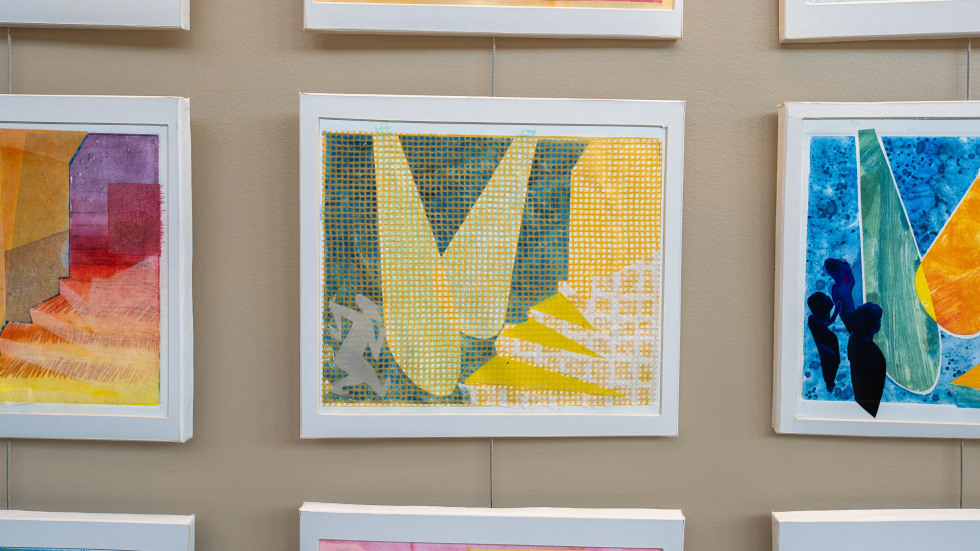
Some of the artwork that resulted from this revelation is currently on display on the second floor of 111 Thayer Street, as part of her Art at Watson exhibition, “Human Mythology.” 

“It’s kind of a grandiose title,” Homma said, “but the idea is that I’m thinking globally now. Today, with the internet and other technology, it’s hard to say countries or people are producing things in isolation. I’m trying to think on the human level. How do we, as individuals, navigate this complex, globalized world?”

In “Human Mythology,” Homma explores development theories, anthropological history and ethnographic practice through the visual language of painting and sculpture. “My show is about finding humanness in the structures around us; in the buildings, in the structures of governance, in the roads, and in memories,” she said.

The work will be part of Homma’s RISD painting thesis, and also part of her IAPA capstone project. “I’m going to keep working through this semester and next semester with these ideas in mind. I feel like I could continue making this body of work for decades and never run out of things to talk about,” she said. 

Homma already has plans for after she graduates. She wants to spend a sixth year at Brown. “I’m planning to apply to Brown’s Master of Public Affairs program,” she said. “I feel like I’ve spent so much time focused on my painting; I really crave the opportunity to spend a year concentrating exclusively on public affairs, and that’s exactly what the MPA offers.”