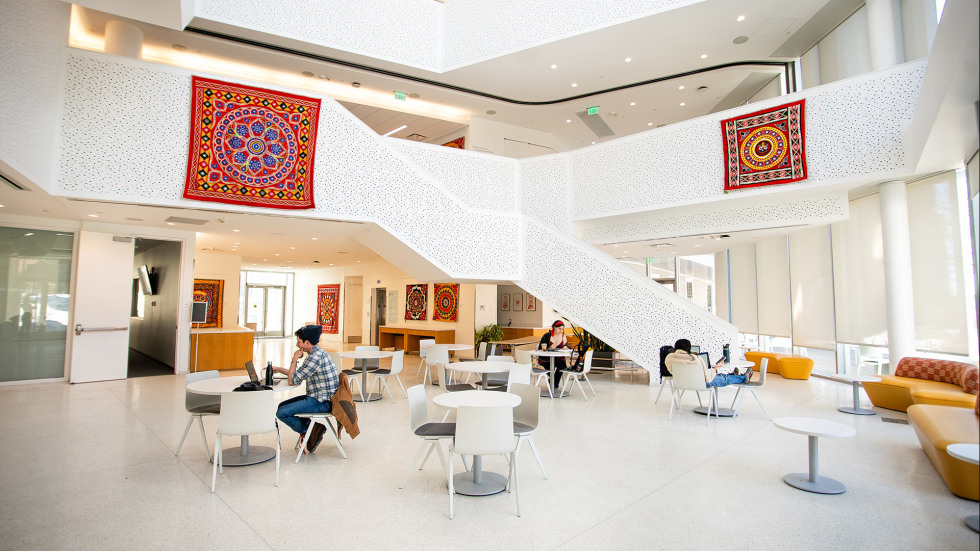
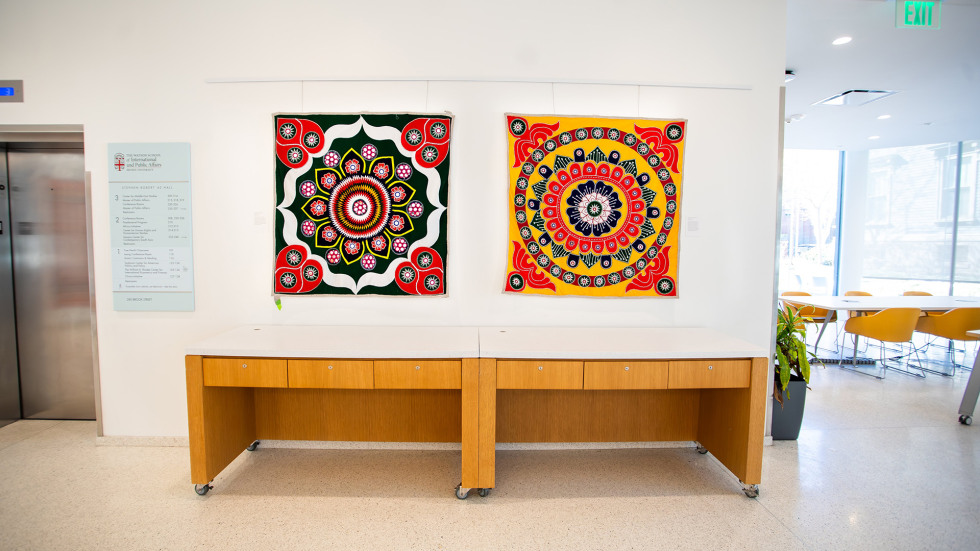
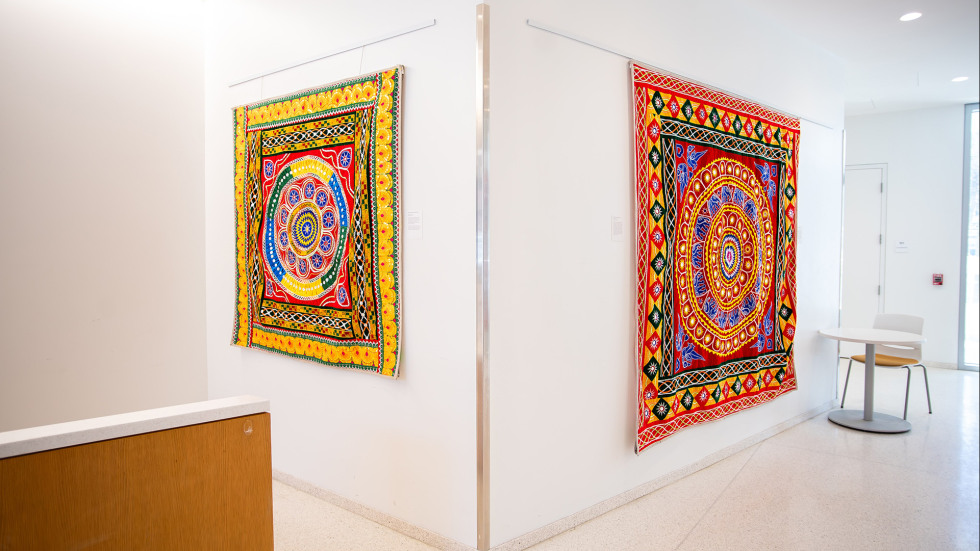
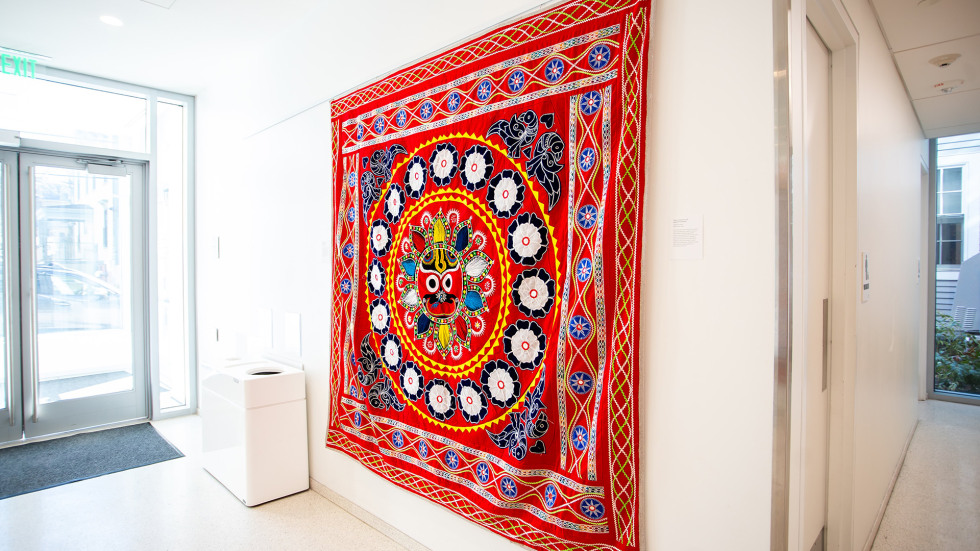
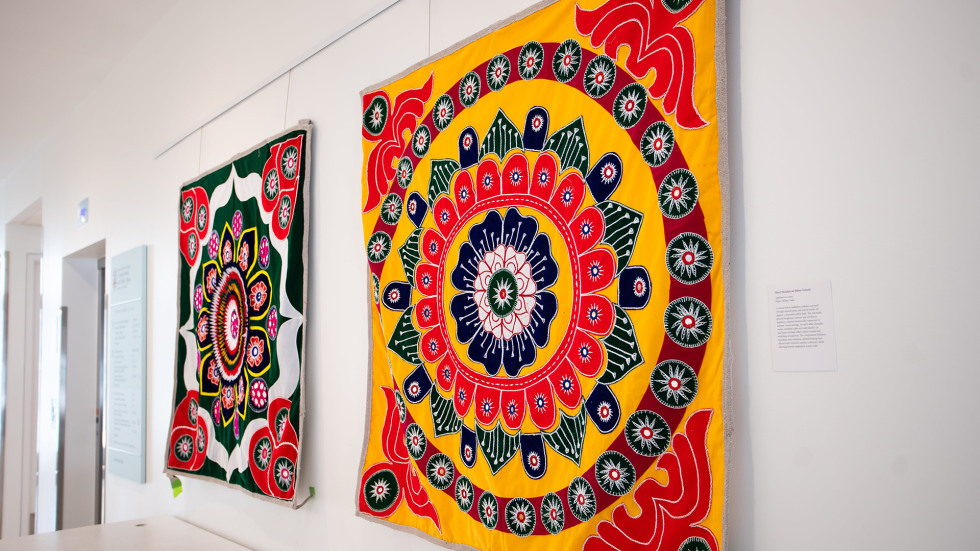
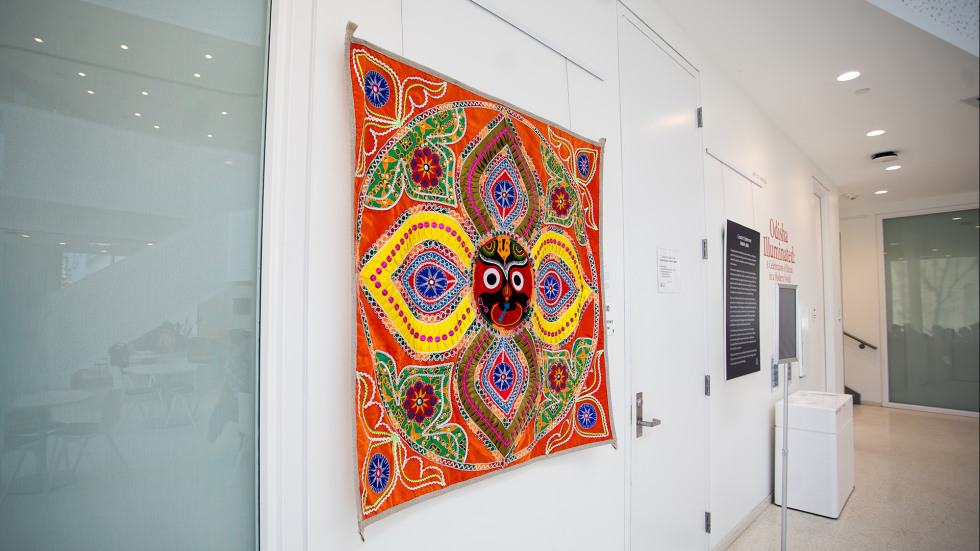
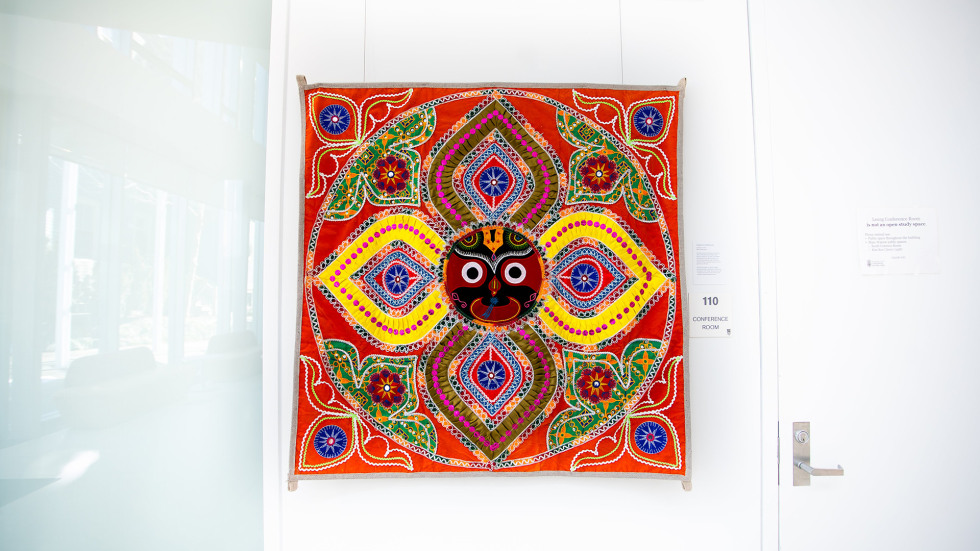
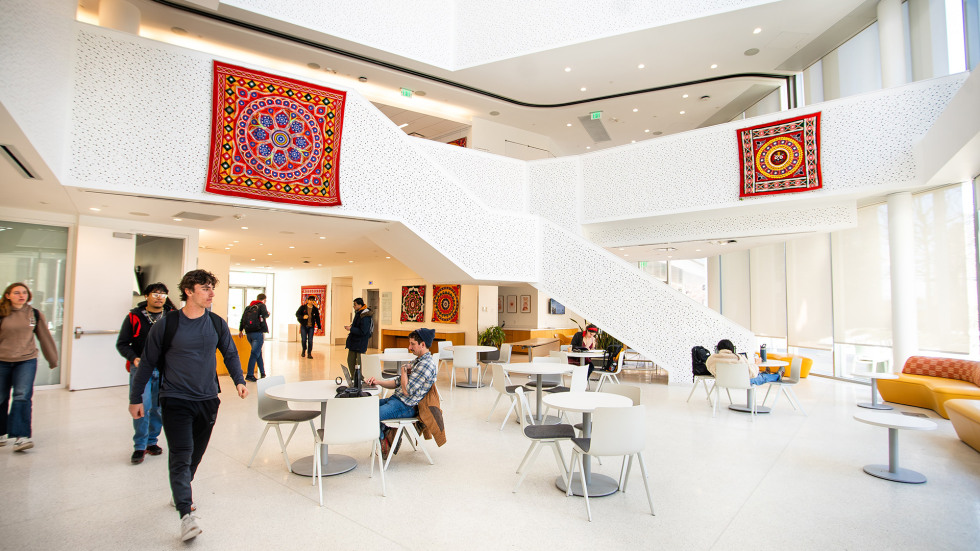
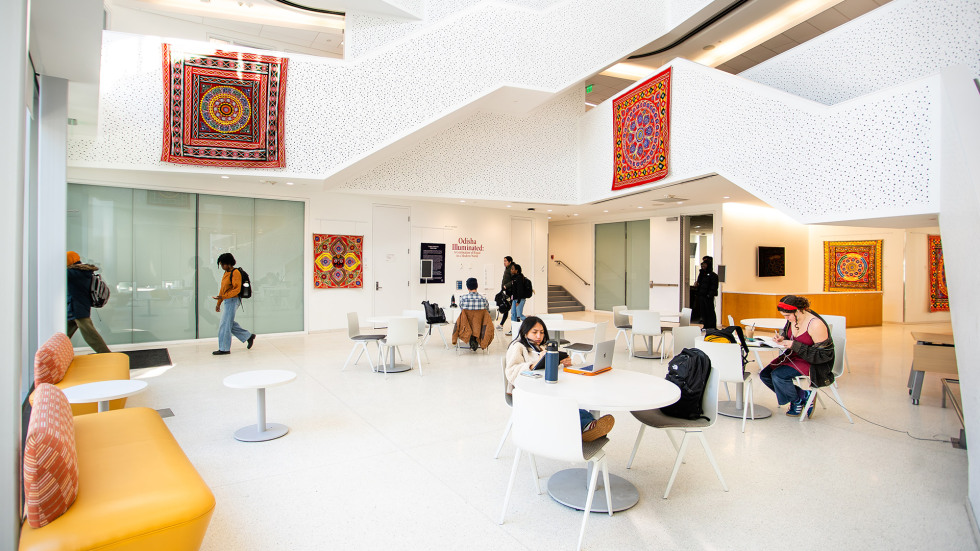
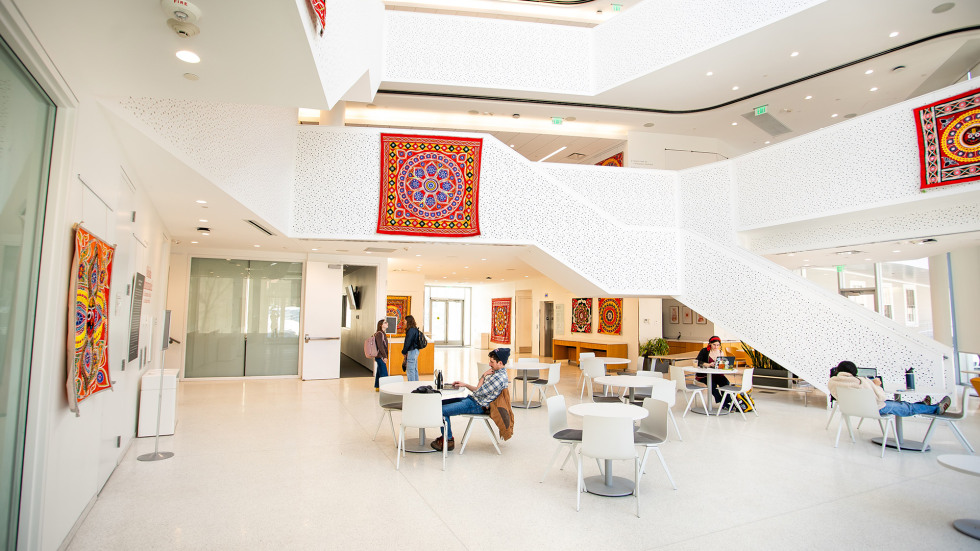
Art at Watson’s exhibition, “Odisha Illuminated: A Celebration of Ritual in a Modern World,” features bold, colorful textiles from the Odisha region of India. It will run through the spring 2026 semester in Stephen Robert '62 Hall.
Odisha Illuminated: A Celebration of Ritual in a Modern World
The appliqué panels in this exhibition come from Odisha, a coastal region in eastern India along the Bay of Bengal, where textile traditions remain deeply embedded in public life and shaped by centuries of trade, pilgrimage, and ritual movement.
Odisha Illuminated: A Celebration of Ritual in a Modern World
The appliqué panels in this exhibition come from Odisha, a coastal region in eastern India along the Bay of Bengal, where textile traditions remain deeply embedded in public life and shaped by centuries of trade, pilgrimage, and ritual movement.
The appliqué panels in this exhibition come from Odisha, a coastal region in eastern India along the Bay of Bengal, where textile traditions remain deeply embedded in public life and shaped by centuries of trade, pilgrimage, and ritual movement.
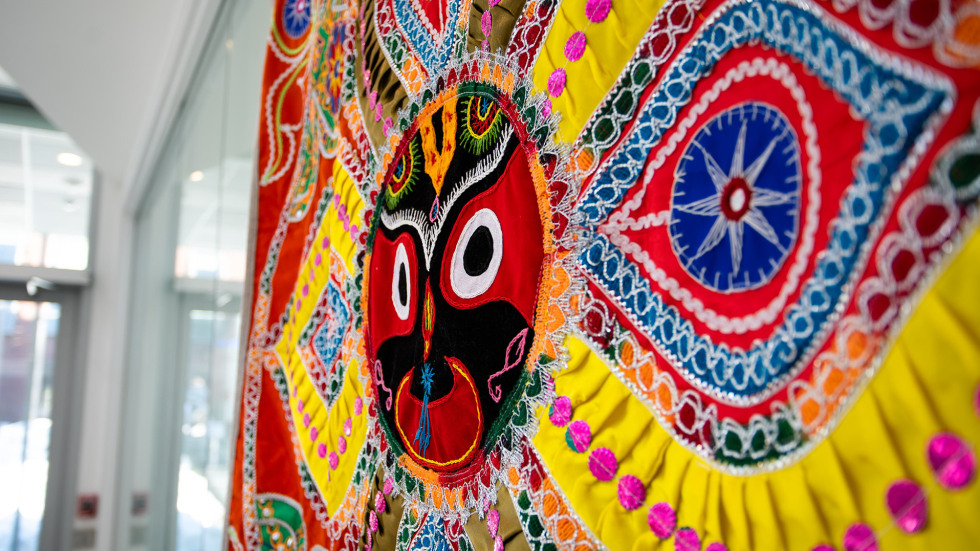
Known locally as chandua, these works serve ritual and communal purposes rather than private display. The tradition is centered in the town of Pipli, where specialized workshops have supported this practice across generations. These panels are created for temple festivals such as the annual Rath Yatra in Puri, as well as for shared civic spaces. Their scale, bold geometry, and symbolic motifs are designed to be seen collectively, in motion, and in public settings.
In workshops and homes, women cut and stitch fabric by hand, passing techniques and visual language across generations. Recurring motifs such as wheels, eyes, animals, and floral forms carry layered meanings tied to protection, continuity, and communal identity. While the panels appear as unified compositions, their making is collective, reflecting the largely invisible labor of women whose skills sustain the tradition.
This exhibition presents chandua as a form of civic art. These appliqués demonstrate how ritual objects function as cultural infrastructure, shaping how communities gather and express shared values. In a global context increasingly defined by speed and abstraction, the slow, manual precision of this work offers a counterpoint.
Bringing these panels into a space dedicated to international and public affairs, the exhibit curator hopes to invite conversation about culture as a vital system through which societies organize meaning and belonging.
1
of
11
2
of
11
3
of
11
4
of
11
5
of
11
6
of
11
7
of
11
8
of
11
9
of
11
10
of
11
11
of
11
News
Artist's Talk & Panel Discussion
https://www.youtube.com/embed/VJP-VGOFPus