The Civil Conflict and Democratic Erosion Policy Lab aims to produce rigorous empirical evidence to better understand and counter threats to peace and democracy both in the US and around the world. The Lab combines research with teaching and policy engagement, and directly involves both graduate and undergraduate students in the production of new knowledge. Current projects include a randomized controlled trial and survey experiment to evaluate the impact of military involvement in domestic policing operations in Colombia; surveys and administrative data collection to study the causes and consequences of violence against environmental activists in the Brazilian Amazon; and a series of randomized controlled trials to test mechanisms for reducing partisan polarization in the US.
Civil Conflict and Democratic Erosion Lab
The Civil Conflict and Democratic Erosion Policy Lab aims to produce rigorous empirical evidence to better understand and counter threats to peace and democracy both in the US and around the world.
Civil Conflict and Democratic Erosion Lab
The Civil Conflict and Democratic Erosion Policy Lab aims to produce rigorous empirical evidence to better understand and counter threats to peace and democracy both in the US and around the world.
Courses
- POLS 1440 (Security, Governance, and Development in Africa)
- POLS 1820X (Democratic Erosion)
Affiliates
-
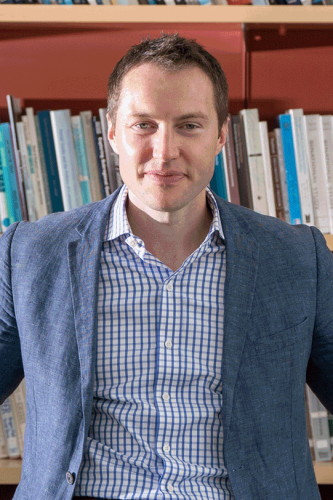
Robert Blair
Arkadij Eisler Goldman Sachs Professor of Political Science and International and Public Affairs
Undergraduate Student Researchers
- Amani Diallo
- Sophia Janssens
- Mei Farina
- Maia Eng
- Cayetana Jaramillo
- Manav Musunuru
- McConnell Bristol
- Brianna Paliz
- Colin Carter
- Justin Meszler
- Ethan Schenker
- Patrick Verma
- Alexandra Mork
- Maksym Temnosagatyi
- Abby Berwick
Graduate Student Researchers
- Lee-Or Ankori-Karlinsky
- Sara Ansari
- Debora Duque
POSTDOCTORAL RESEARCH ASSOCIATE
- Felipe Parra
Recent News
News from Watson
New policy labs will 'turbo-charge' Watson research programs
Watson Policy Labs, a new initiative of the Watson Institute for International and Public Affairs, will enhance the link between teaching, research and public outreach by addressing specific policy issues through a combination of faculty research, student training, research-based courses and public outreach.
Read Article